
In July I finally finished these two little eddy muffin paintings. I had started them last fall but they were put on pause while I focused my attention on the marathon predawn painting sessions of Bloom to meet the deadline. These paintings, the fourth and fifth pieces of art in the Ode to the Eddy Muffin series, but the first two paintings, were made to look slowly and deeply at a particularly gross eddy on the Klamath River in Keno, Oregon and its ubiquitous thick foam. One of the things that fascinates me is that I can start with something that repulsive, but the more deeply I look at it, the more interesting and beautiful it becomes. Close attention has the tendency to do that. The foam is like a slowly moving low relief sculpture on the surface of the water, revealing patterns of water movement and the flow of the currents moving in opposing directions. The reflection of warm light and its accompanying blue shadows stretching across the dark water and white foam are sublime, so sublime that I thought the nastiness of the eddy was worth exploring painting it with semi precious gems. That’s how potent fascination and attention can be: it can even compel you to paint with gems! More on that color piquancy below.

Ode to the Eddy Muffin: Eddy Muffin IV, oil on linen, 14 x 16 in., 2025, Leah Wilson

Ode to the Eddy Muffin: Eddy Muffin V, oil on linen, 14 x 16 in., 2025, Leah Wilson
This eddy, full of foam and duckweed, swirls upstream from where the JC Boyle dam once was a mere year ago on the Klamath River. There is a car submerged in the eddy too. It is also one of Dr. Julie Alexander’s research sites. Julie studies worms that are an integral part of the lifecycle of a parasite named Ceratonova shasta that decimates salmon. It’s my favorite site of her studies, not because it is the most beautiful – it is certainly not, but because it is the most repulsive. Julie dives in it but I never want to touch the water. Over the years my revulsion transformed into fascination. I thought the foam was caused by pollution and poor water quality because of the dams and farms. Maybe some of it is. But it is also part of the river’s ecosystem. It’s a productive river, as the scientists call it. Science can be fun like that. Thanks to another scientist, Lindsey Rustad, an amazing scientist from Maine who has been obsessed with foam in rivers since 1983, my beliefs and perspective about foam have been forever changed. I’m curious about how the eddy looks now that the four dams below it are no longer there, but I haven’t had the opportunity to visit it yet. I’m curious to know if this eddy has lost some of its foam and its worms now that the dams are removed. If so, could the foam and worms connected?
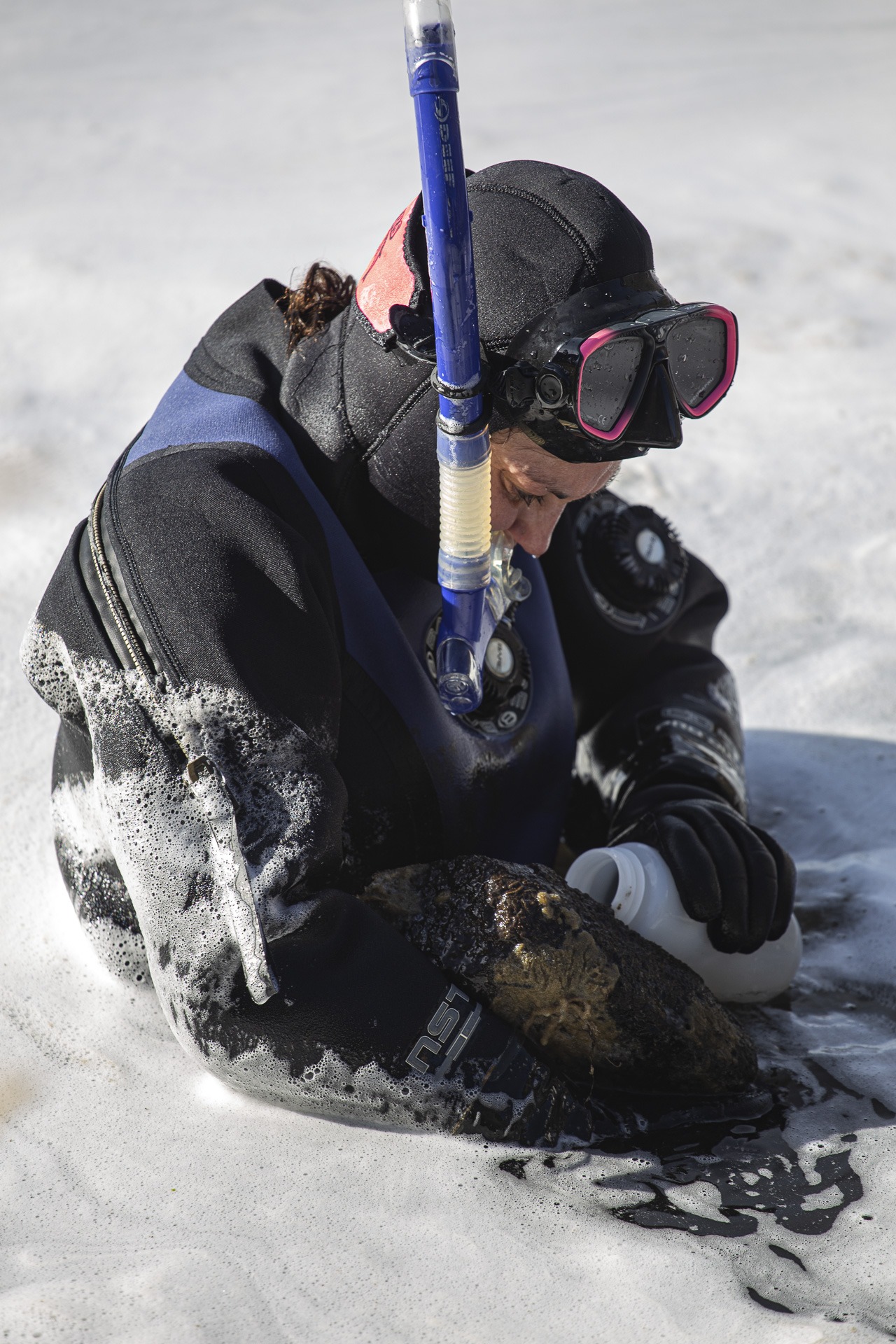
Julie Collecting Worms in Keno Eddy
Let's Keep in Touch!
No AI Statement: AI was not used, and will never be used, to generate any of my content. I create every image and write every word.
I personally reply to any response from you.
Studio News
Have the stories sent to your inbox
Studio News will provide you with a glimpse into the art making process. It's the next best thing to visiting me in my studio.
Your support is important to me and your information will never be shared.
Send an Email
Write to me: Ask a question, send a comment, or just say hello. I'd love to hear from you!